 P-46 · interim
Zinc plating
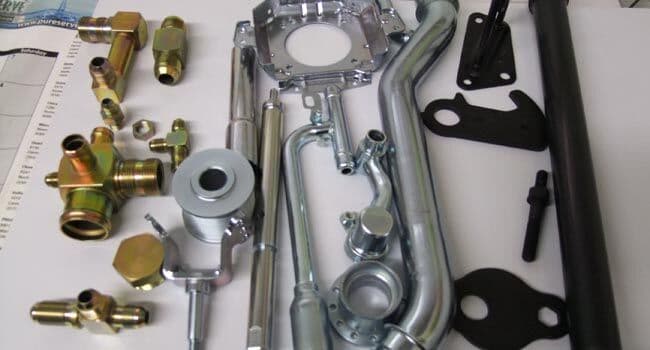
Zinc plating electro-deposits a layer of zinc on steel. Zinc corrodes sacrificially before the steel does, giving solid rust protection at a sensible cost — ideal for brackets, wire rods, shafts, nuts and general parts.
At Chayatat we run a non-cyanide alkaline zinc bath, which builds an even coating on complex shapes, followed by trivalent (Cr³⁺) passivation in silver/blue, yellow or black to the customer's specification.
Zinc-nickel plating
Zinc-nickel is an alloy of zinc and nickel. It generally resists corrosion several times longer than plain zinc and holds up better when parts get hot, which is why it is popular for underbody, engine-bay and brake components.
Which one should you choose?
| Zinc | Zinc-nickel | |
|---|---|---|
| Corrosion resistance | Good | Very high |
| Heat resistance | Moderate | Good |
| Cost | Lower | Higher |
| Typical parts | Interior parts, brackets, wire | Underbody parts, tubes, shafts, hubs |
The deciding factor is always the customer specification — thickness, passivation colour and salt-spray hours. Our team is happy to review your spec and recommend a finish. Contact us